The name cryonics points at the wrong idea. It makes people picture freezing, a body turned to ice like a steak in a deep freezer. But the actual aim is stranger and more careful than that, and it is captured better by a phrase that sounds almost like a contradiction: preservation without freezing. The trick that makes it possible is vitrification, and this is the short, zoomed-out version of what it is, what it buys you, and, just as importantly, what it does not.
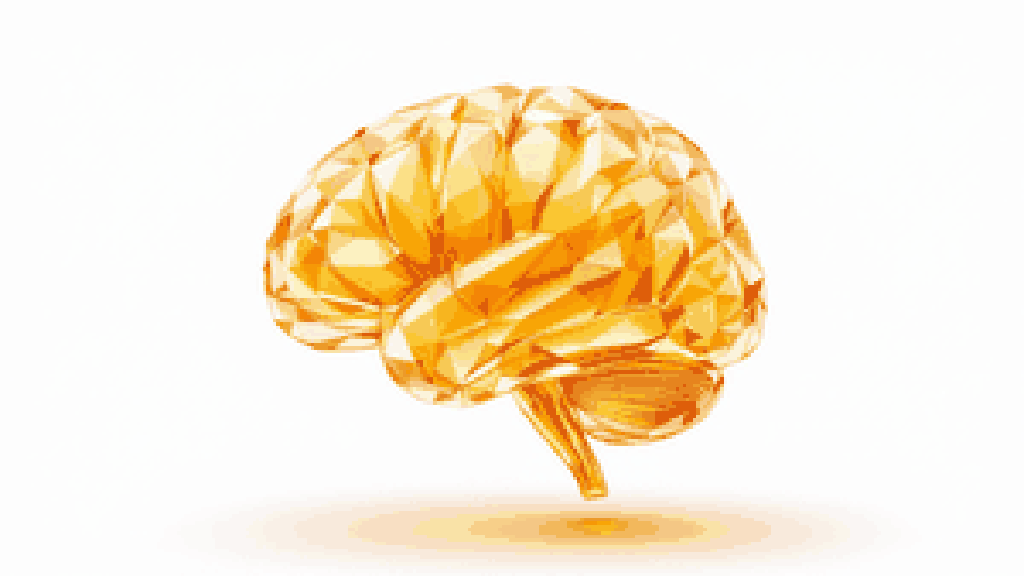
Bringing a body into a glass-like state
Vitrification is the process of taking a liquid into a solid state without ever forming crystals. The word comes from the Latin vitrum, glass, and glass is exactly the right mental image. When you cool most liquids they crystallize; cool them the right way, with the right chemistry, and instead they simply get more and more viscous until they lock into a rigid, disordered solid. No crystals form. The molecules are held in almost exactly the arrangement they had as a liquid, just no longer moving.
In cryopreservation, that is the difference between a destroyed brain and an intact one. The water in the body's cells is largely replaced with cryoprotective agents, and the tissue is cooled until it passes the glass-transition temperature, somewhere around -120°C to -135°C, and solidifies. The result is not a frozen body. It is tissue in a glass-like state, and in that state decay has effectively stopped.
What vitrification achieves
Done well, vitrification accomplishes four things at once:
- It prevents ice crystals from forming, so the mechanical shredding of freezing never happens.
- It preserves the cellular and structural architecture of the tissue, most importantly the neural wiring in the brain.
- It slows every chemical and biological reaction to a near standstill, halting decay.
- It holds the information pattern of the tissue still, the part that actually encodes a person, intact enough that a future technology might one day repair and recover it.
That last point is the reason any of this is worth doing, and it connects straight back to what biostasis is: keep the structure, and you keep the person, even across a gap no current technology can cross.
What vitrification does not do
Here honesty matters more than enthusiasm. Vitrification does not restore life. It does not reverse aging or cure the disease that caused death. It does not, by itself, guarantee that anyone will ever be revived. All it does, and this is plenty, is preserve the physical substrate of a person well enough that the question of revival stays open instead of being closed forever by burial or cremation. It is a bridge to a future that may or may not be able to finish the job, which is why we are equally clear that revival is currently not possible.
Everything downstream depends on getting this one step right. If freezing damage were allowed to destroy the brain's structure in the first hours, no future medicine could reconstruct what was lost, because the information itself would be gone. Vitrification is the difference between preserving a person and merely storing the wreckage. That is why it sits at the center of how a modern cryopreservation is actually carried out.
When fixation is the better option
Vitrification depends on getting cryoprotectant everywhere it needs to go, and that depends on a circulatory system that still distributes evenly. Where ischemic damage is already severe, it does not, and patchy perfusion means ice in the places that matter most. For those cases there is a second method: aldehyde-stabilized cryopreservation, or ASC.
ASC begins by perfusing the brain with glutaraldehyde, a fixative that crosslinks proteins into place. Decay stops at once and the structure is locked before any cooling starts. With the tissue stabilized, cryoprotectant can then be raised slowly to a high concentration, around 65% ethylene glycol, and the brain is vitrified near -135°C for long-term storage.
The evidence for it is unusually direct. ASC held synaptic connectivity across an entire pig brain well enough to win the Brain Preservation Foundation's large mammal prize, checked by 3D electron microscopy after rewarming.
The trade-off is real and belongs in the open. Fixation is not reversible by anything currently imaginable. Glutaraldehyde holds the connectome in extraordinary detail, and it does that by chemically bonding the proteins together, which forecloses restarting that tissue biologically. ASC preserves the pattern and gives up the route back through the original substrate, which is the continuity question in physical form.
That is why it is not the default. Where perfusion is good, vitrification keeps both routes open. ASC is what we reach for when the alternative is losing the structure altogether.
TL;DR: Modern cryopreservation aims to vitrify tissue rather than freeze it. Cryoprotectants reduce ice formation so biological structure can enter a stable, glass-like state.
Take the cryopreservation guide with you
Get a practical guide to the procedure, its limits and the decisions involved.
Loading the interactive tool...
Further reading