There is a version of cryonics planning that sounds almost too easy.
You sign the contract, choose a funding method and tell someone close to you. Done.
I understand why people want it to work like that. You have made a difficult decision. The last thing you want is to turn it into a permanent administration project.
But your cryopreservation can only happen on a day when you can no longer explain what you wanted, find a document or make a payment.
That changes the standard.
A wish is strongest when it has been turned into a system that still works without you. The contract matters. Accepted funding matters. So do the people who know when to call, where the documents are and what not to improvise.
None of this makes cryopreservation certain. It removes the very ordinary failure points that can prevent an otherwise workable case.
Your family should not be the system
Most relatives mean what they say while you are alive.
Then death happens. They are grieving, the hospital wants a decision, a funeral director asks unfamiliar questions and the person who promised to call Tomorrow.bio cannot find the number.
Good intentions are not the same as a reliable process.
Tomorrow.bio has encountered cases in which a member trusted relatives to notify us or arrange payment and that did not happen. In one case, we learned that the member had died almost a year earlier, when a partner later contacted us about cancelling the membership.
In other cases, relatives had agreed to pay for the procedure, then stopped responding after the member died. By that point, the member could not repair the arrangement.
The lesson is blunt: do not make one family member the only person standing between your decision and the call that activates it.
This is not an argument against trusting your family. It is an argument against designing a time-critical system around trust alone.
Use an accepted funding arrangement that does not require someone to make a new financial decision after your death. Keep more than one emergency contact. Make sure Tomorrow.bio has current details for the people most likely to know if your health changes.
Family opposition deserves a direct conversation too. Signing up secretly while your partner is strongly against cryonics is a formula for a fight at the worst possible moment.
Your partner needs to know now. They do not need to share your view, but they do need to understand that this is your decision and that you expect it to be respected.
How ready is your plan?
Use this short assessment to find practical gaps in your cryopreservation arrangements.
Loading the interactive tool...
The documents are there for a reason
The first document is the Biostasis Contract.
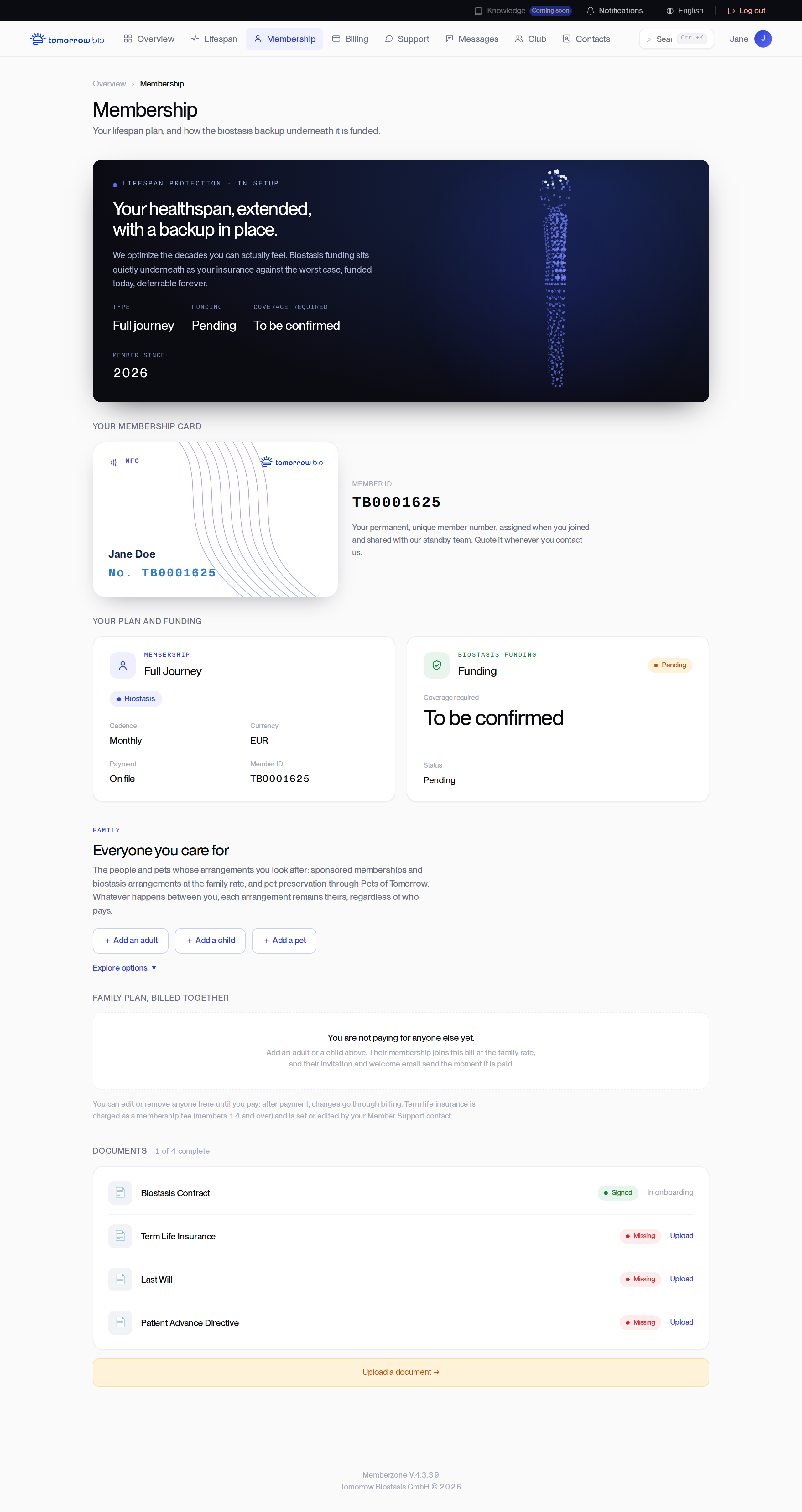
Tomorrow.bio's current documents page explains that members receive a pre-populated contract after signing up. It includes the support and research agreement and provisions concerning body donation.
That contract creates the relationship under which Tomorrow.bio can act. It is not a universal command that automatically overrides every doctor, relative or public authority in every country.
The difference matters.
A patient advance directive can communicate your wishes while you are alive but unable to speak. Tomorrow.bio recommends sharing it with your doctor or keeping it somewhere accessible because it may also help us learn about an unexpected emergency sooner.
A last will adds evidence of what you wanted after death. Tomorrow.bio's current guidance recommends a handwritten or notarised version based on the relevant template, with the original mailed to the Berlin office.
Formal rules differ by country. If you need to know whether a particular document will work in your jurisdiction, obtain local legal advice rather than assuming that an English template solves everything.
Still, do not let the existence of legal variation become an excuse to do nothing.
A current contract, an appropriate last will, a patient advance directive and accessible copies are much better than a wish your family vaguely remembers. The practical inventory is set out in important documents to keep.
Check the documents again after moving country, changing your name, changing partner or changing the preservation option you selected. A plan written for a life you no longer live is not a finished plan.
Then there is funding.
Membership and procedure funding are separate.
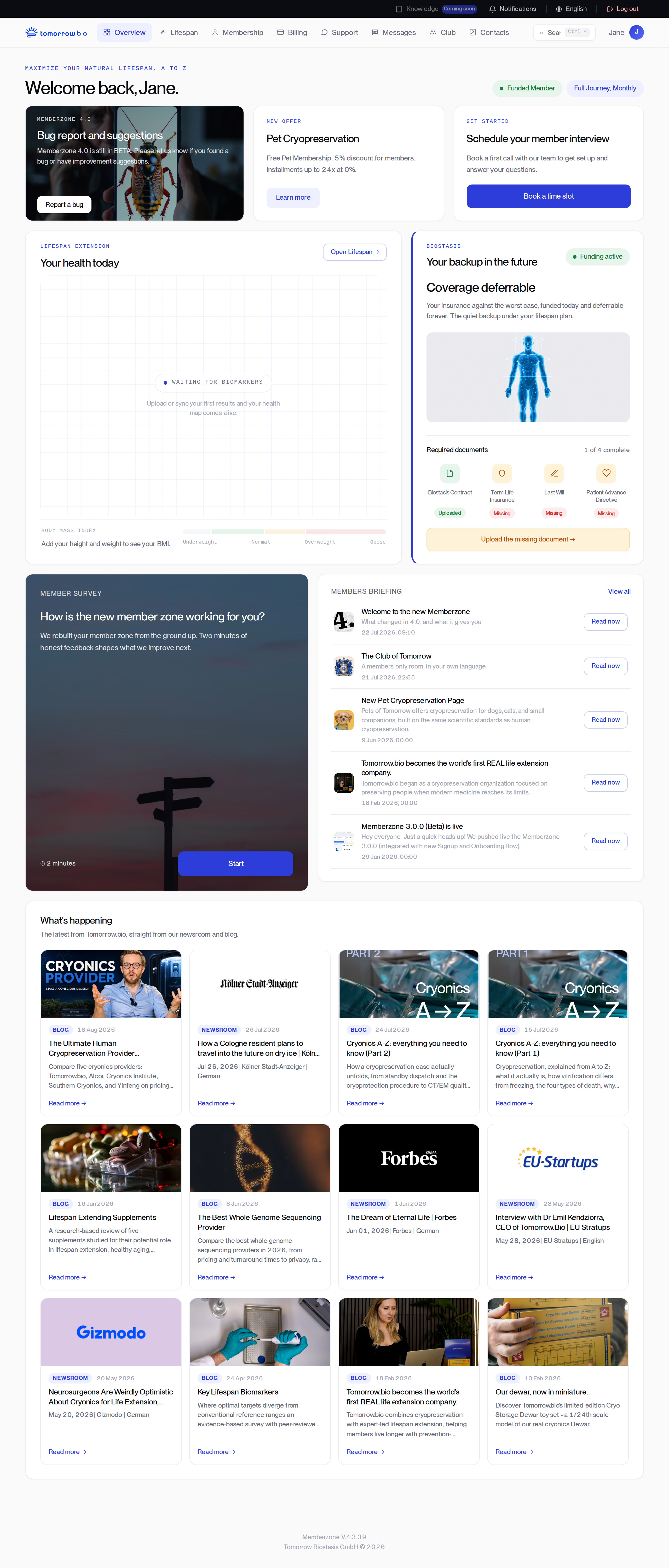
Tomorrow.bio currently states that membership provides eligibility and support, while the cryopreservation procedure is funded separately. The exact minimums can change, so the current policy and your accepted arrangement are what matter.
Do not rely on a promise that someone will find the money later.
If you use insurance, confirm the beneficiary, amount and status. If you use another route, make sure Tomorrow.bio has reviewed and accepted it. Setting up a funding method explains the available structure in more detail.
Then review it periodically. Policies lapse. Bank accounts move. Families change. A funding plan can look complete for years while one outdated detail quietly breaks it.
This is the part many people would prefer to leave to a supportive partner. Please do not.
Tell us before the emergency
Tomorrow.bio cannot respond to an event it does not know about.
If you receive a serious diagnosis, enter hospice care or are admitted to hospital with a significant risk of death, contact us early. Early notice gives the team time to understand the medical situation, location, likely legal route and logistics.
It does not commit anyone to a particular intervention, and it does not replace ordinary medical care.
It gives us time.
Give the current emergency contact route to your partner, family, carer and any other person likely to be present. Put it somewhere they can find without unlocking your phone.
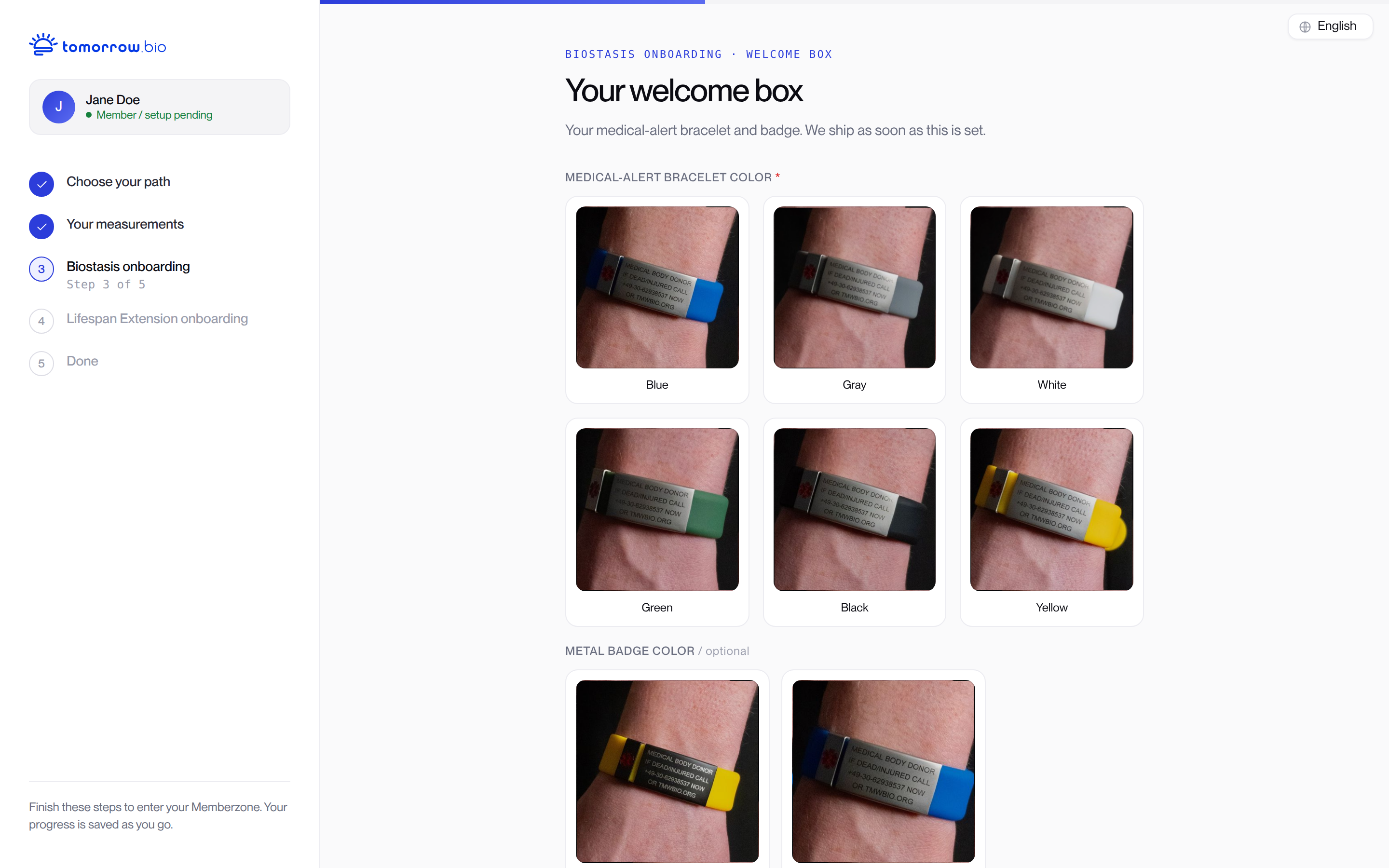
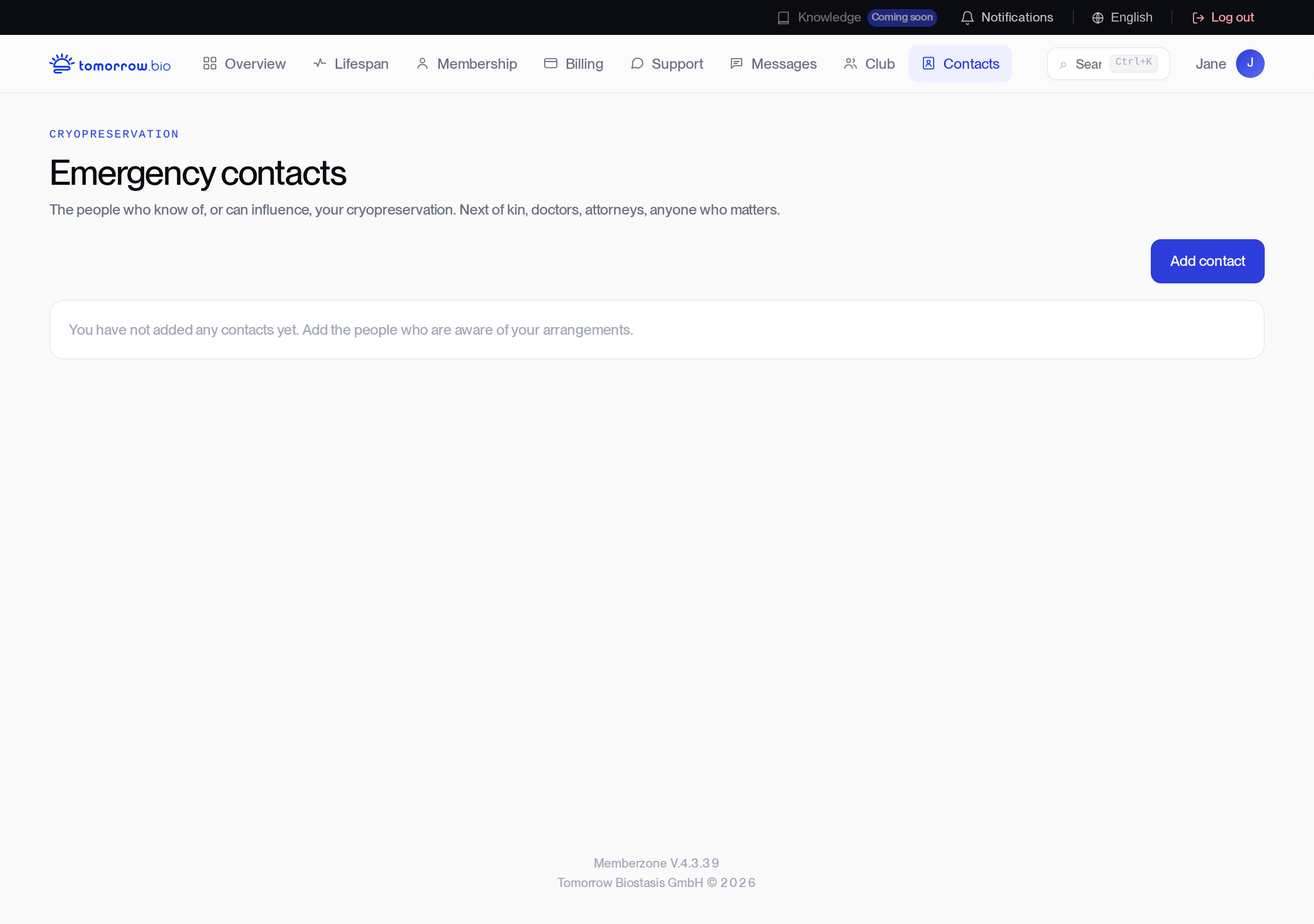
Add a backup contact who is willing to call even if the first person freezes, disagrees or is unavailable. If your address, health, travel plans or contacts change, update your Memberzone information and tell the support team when the change is important.
The operational chain begins with notification. The rest of that chain is described in what actually happens when you need us.
Once notified, Tomorrow.bio coordinates the cryopreservation response, local partners, documentation and transport as the case requires. The member is not expected to design those operations alone.
But we cannot recover time that disappeared before the first call.
Do not wait for a crisis to explain it
Tomorrow.bio will fight for a member's documented wishes when there is a workable legal route.
We will not quietly treat a relative's objection as more important than the informed choice a member made for their own body. That commitment is part of taking membership seriously.
But a fight still needs facts, notice and authority. It is very hard to defend a wish we learn about months later. It is also hard to act when funding still depends on the person objecting.
This is why secrecy is so dangerous.
If your spouse does not know you signed up, tell them. If your family thinks you were joking, correct the record. If someone is likely to oppose the procedure, tell Tomorrow.bio before there is an emergency so appropriate measures can be considered.
No stack of documents can guarantee the outcome of every case. Authorities can investigate a death, local law can impose conditions and circumstances may make a procedure impossible.
The point is not to pretend those risks disappear. The point is to stop adding avoidable ones.
Your plan should not require your family to remember perfectly, agree unanimously and produce money after you die. It should already be set up to work if someone forgets, disagrees or disappears.
TL;DR: Your cryopreservation plan should work without depending on one relative to call or pay. Keep the contract, accepted independent funding, documents and backup contacts current, tell your partner now and notify Tomorrow.bio early when health changes.
Further reading